How To Deal With T-Junctions in Feng Shui
Dealing with T-Junctions is a common topic of discussion in the practice of Feng Shui. So, why do homes located on a T-Junction get such a bad rap? In the shortest of responses, the energy rushes down the street so quickly, its slams into the home, potentially making the occupants feel uncomfortable, while also allowing for an accumulation of negative energy to build up over time.
The T-Junction is said to have a few symbolic names, including “tigers eyes,” “poison arrow,” “sha energy,” and “cross roads.” It’s important to note that different degrees of T-Junction situations could affect the home. To know which is which, it requires a bit of investigation and keen observation.
For starters, you could observe the traffic pattern to see how the flow of movement is heading toward the home.
Below is a quick gauge:
If every 2-5 minutes, clearly that is a high level of sha energy.
If every hour, it’s a tad bit better, but still that’s fairly a high level of sha energy.
If every 5-10 hours, you're in pretty good shape.
Essentially, the less traffic along the T-Junction street and the slower the pace of the cars, the better off you are.

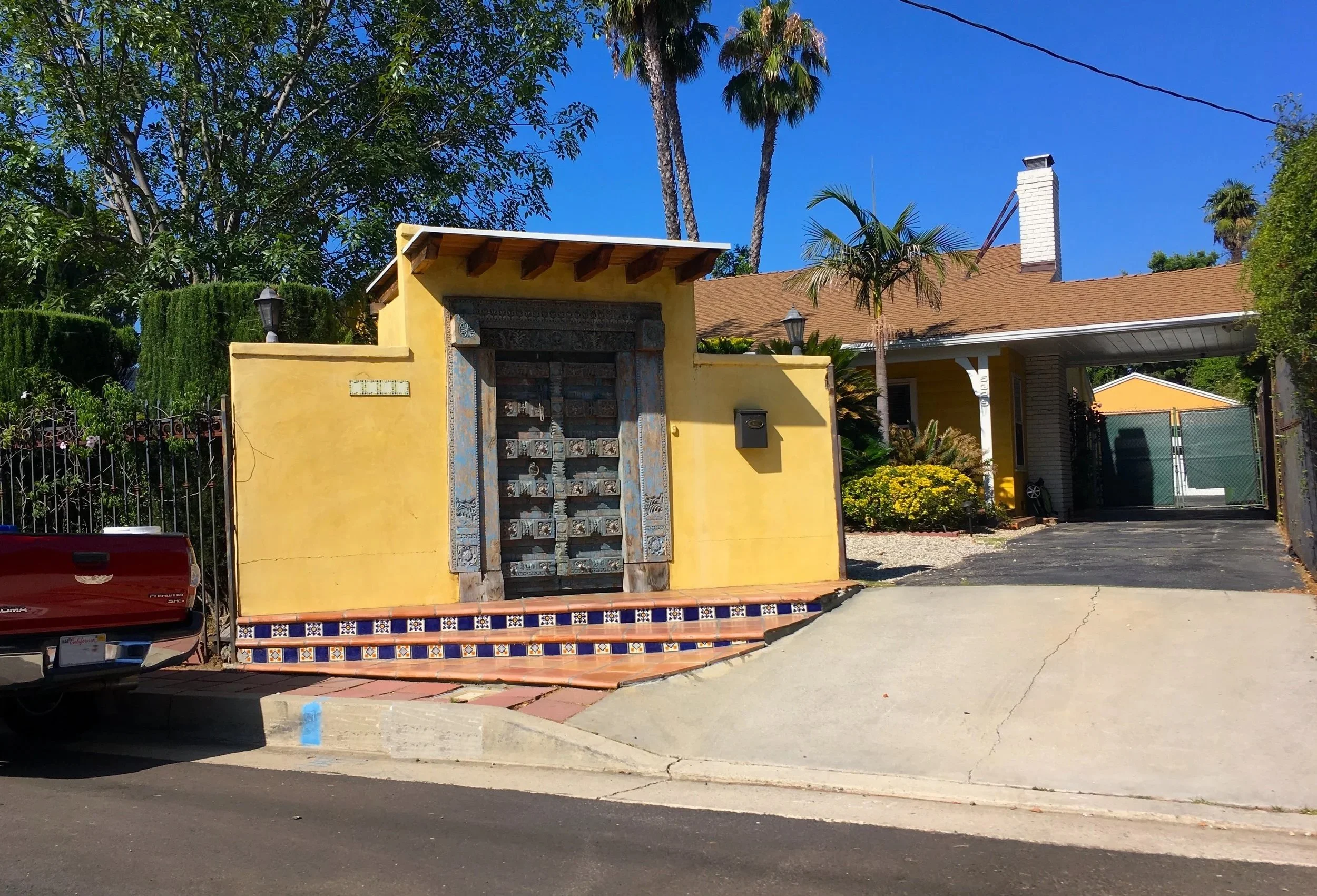
The image above is of a case study with a home located in Los Angeles, CA, which happens to be on a very busy T-Junction Street. This house falls into the every 2-5 minute traffic pattern of movement.
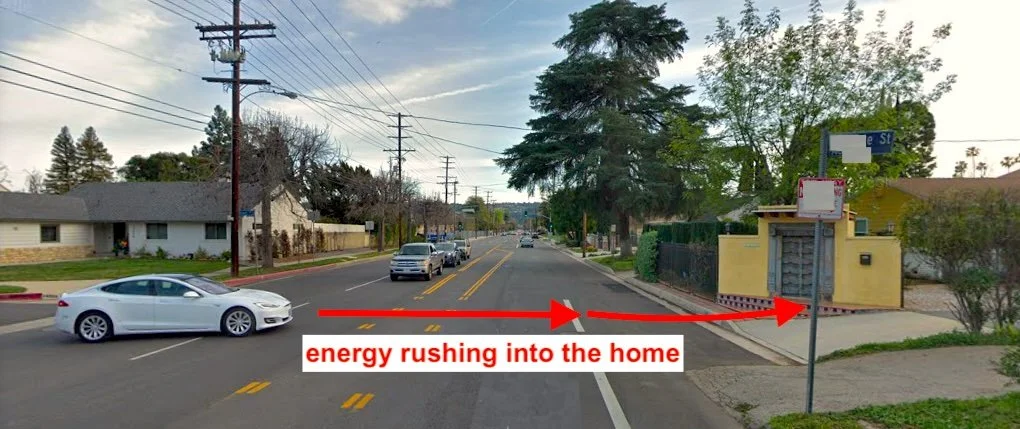
The image of the same home from ground level. As you can see, the white car is turning left, but if something were to go wrong, the speed and force of that car would move toward the yellow house, even if they try to turn suddenly. Not to mention, at night the car headlights (Tigers Eyes) are facing directly into the home. This is a very high level of sha energy hitting into the home.